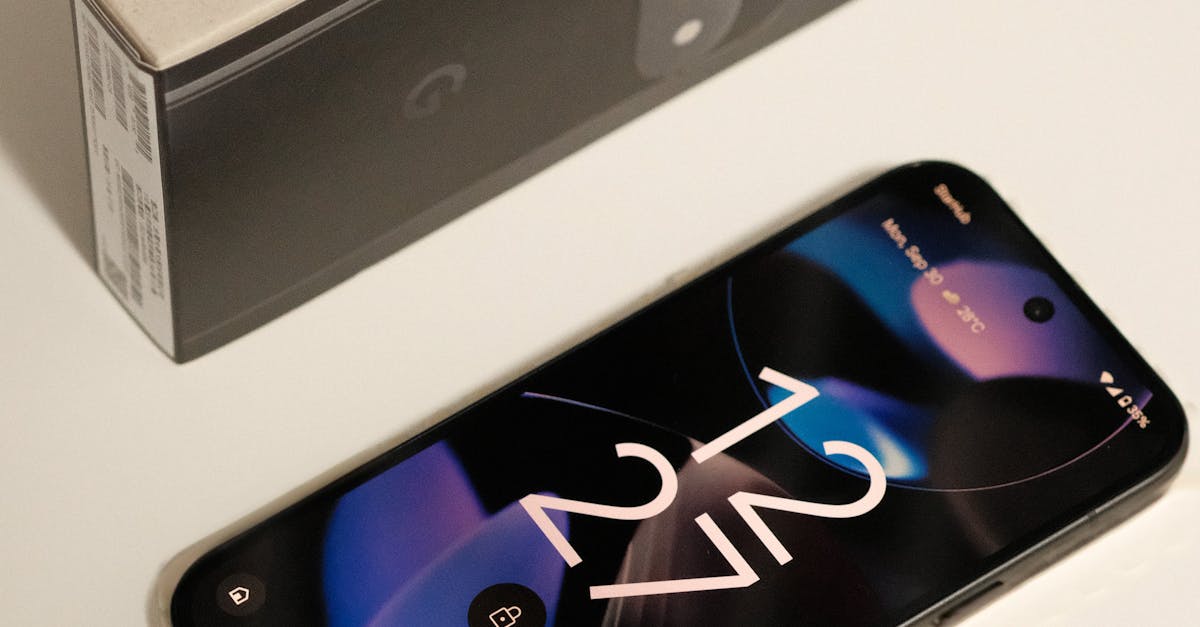
Google Pixel 10 Pro XL review: the AI camera phone for Australians
Three weeks with Google's biggest Pixel: Tensor G5, Magic Editor, Pro Res Zoom and Gemini all baked in. At $A1,999 for 256GB, it is the AI camera phone Australians should look at first this year.

The first proper test happened on a Saturday at Edinburgh Gardens, my sister's footy team's post-match lunch, the one where someone always brings a quiche and no one ever brings cutlery. My niece, two and a half, was holding a babycino with both hands and concentrating so hard her tongue was poking out. I lifted the Pixel 10 Pro XL, framed her face through the foam, and the phone did something I would not have done. It chose her hand. Pulled the highlights down on the foam. Brought the cafe lights behind her into focus. The picture is on my fridge now. Three weeks of testing later, I have put my iPhone 17 Pro Max in a kitchen drawer and forgotten about it. At $A1,999 for the 256GB, this is the AI camera phone I would tell most Australians to look at first.
What is the Pixel 10 Pro XL and what's new?
It is the biggest, most expensive non-folding Pixel Google has ever made, and the bit that matters is silicon. Tensor G5 is Google's first chip on a 3 nanometre process. The CPU is 34 per cent faster than last year's G4. The TPU, the bit that does the AI work, is 60 per cent more powerful. Numbers do nothing for me until I see them. Here is what they meant on Anstey Street last Wednesday, standing on the platform waiting for the 19. I asked Gemini to summarise a 26 page council planning report I had open in Chrome. The summary came back in about three seconds. On the Pixel 9 Pro XL I reviewed last spring, the same job took 11 seconds and pulled the battery down 4 per cent. Magic Editor, Best Take, Audio Magic Eraser, the new Camera Coach, all of them now run locally instead of pinging Mountain View. No round trip. No warm phone. No bar of Telstra signal evaporating on the Phillip Island ferry while the Magic Editor wheel spins.
The cameras themselves are not new. Same 50 megapixel main, same 48 megapixel ultrawide with macro, same 48 megapixel 5x telephoto, same 42 megapixel selfie, all lifted wholesale from the Pixel 9 Pro XL. What is different is what the new chip lets the same glass do. Pro Res Zoom now stretches digitally to 100x. Video Boost handles 4K at 60 frames a second and 8K at 30. Gemini Nano sits behind nearly every shutter press, cleaning up noise and tweaking exposure before your finger has lifted off the screen. The Pro XL also gets a Pixelsnap magnetic ring on the back for Qi2 wireless charging at 25 watts. The smaller Pro does not, which is Google's obvious nudge towards the bigger phone.
How much does it cost in Australia?
Three storage tiers locally. The 256GB is $A1,999. The 512GB is $A2,199. The 1TB tops out at $A2,549. Google has been steady on those prices since the late August launch. Colours are Obsidian (black), Moonstone (light grey), Porcelain (off-white), and a deeper Pro XL exclusive finish that varies between retailers. The Telstra store on Bourke Street, where I picked up my review unit, only had the Obsidian on the shelf. I took it. It picks up fingerprints in about 11 seconds.
JB Hi-Fi, Officeworks and Harvey Norman are bundling $A400 in-store gift cards with outright purchases. Telstra is taking $A500 off the device repayment on its 24 or 36 month plans, the cheapest landing somewhere around $A94 a month including 50GB of data. Optus has $A600 off on its eligible SIM plans, starting at $A55 a month for the base tier. Vodafone ran a free PlayStation 5 promotion at launch that has since ended. For most readers the cleanest path is JB Hi-Fi outright with the gift card, which works out to roughly $A1,599 net. The iPhone 17 Pro Max starts at $A2,099 here for 256GB. The Pixel undercuts it by $A100 at the entry tier and by progressively more as you go up the storage stack.
What's it like to use day to day?
Heavy. The first thing I noticed picking it up at the counter on Bourke Street was the weight. 232 grams, technically one gram lighter than my iPhone 17 Pro Max, which means it should not feel heavier. It does. Or did, for the first six days. After a week of one-handed scrolling on the 96 tram into Carlton my right thumb ached at the base. By week two my hand had quietly adapted. The aluminium frame and matte glass back have just enough grip that I have not dropped it once, even with a takeaway flat white in the other hand on a windy Anstey ramp morning. The flat white spilled. The phone did not move.
The screen is the best I have used outdoors. I keep coming back to that line. Midday on the Phillip Island ferry deck, sun hard off the water, I could read text without squinting. Apple's display gets close but bleaches faster in direct sun. The 120Hz LTPO panel scrolls glassy-smooth. The new Material 3 Expressive UI animates with a bouncy weight that took me about two days to warm to. Now I find iPhone animations a touch flat by comparison.
Battery life is the real upgrade and I think it is what will sell this phone. Over the test period I averaged 32 hours of mixed use. Which means I genuinely stopped charging overnight by the second week. I would top up for 20 minutes on the kitchen bench while making lunch, and that was the day's charge sorted. Compared to the Pixel 9 Pro XL I reviewed last year that is about a six hour jump. The 25 watt Pixelsnap puck Google ships separately is neat. I do wish it came in the box.
The camera is where I kept catching myself smiling like an idiot in cafés. The Edinburgh Gardens shot of my niece is one. There are three more on my fridge from the same afternoon. On a building site near my flat in Coburg I shot a crane jib at 50x and the cables stayed crisp. At 100x it does start to look painted, especially on faces. Treat it as a useful 30x and a fun 100x you do not trust and you will be happy. Best Take swapped a frowning face for a smiling one in three of four group shots I tried at a Brunswick birthday lunch. The fourth shot's loser had her eyes shut in every frame, which is on her, not the phone. Magic Editor moved a council bin out of a Lygon Street shot in about four seconds, all on-device. The thing I expected to love most, Magic Cue, has been the most disappointing of the lot. More on that below.
How does the Pixel 10 Pro XL compare to the iPhone 17 Pro Max?
These are the two best phones in Australia in 2026 and the choice between them is now mostly about ecosystem rather than hardware. I lent the Pixel to my sister for a week. She has been on iPhone since the 5S in 2013. She came back grinning, wanting to know how to send the photos to her partner's iPad. That sentence is the whole comparison.
On screen, Apple still wins on colour accuracy for video work. The Pixel wins on outdoor brightness and HDR photo display. The Pixel's 3,300 nit peak beats Apple's 3,000 nit claim in real Melbourne summer light, and I watched it do exactly that on the Phillip Island ferry. On battery the Pixel pulls ahead by roughly four hours of mixed use in my testing. On camera, DXOMARK has the Pixel 10 Pro XL at 163 against the iPhone 17 Pro Max at 168. Apple has a marginal lead on the test bench. In hand I disagreed. The Pixel produced more keepers from group shots and from low-light scenes. The iPhone produced more cinematic video and especially more cinematic-looking faces.
The real differentiator is the AI. Gemini integration is baked into the Pixel at a depth Apple Intelligence has not yet reached. Asking Gemini to summarise a 40 page council report I had open in Chrome, then read it aloud to me while I drove from Brunswick to St Kilda, was the moment I understood why Google built the new chip. Apple Intelligence still chokes on documents that long. I have tried.
Where Apple wins is the rest of your stuff. iMessage. AirPods pairing. Apple Watch. CarPlay versus Android Auto, which is a coin toss but still tilts Apple in many older cars. Mine is a 2018 Mazda CX-3, and Android Auto only sometimes remembers to wake up at the boot screen. If your house runs on iPad and MacBook, the switching cost is real. If you are already on Android, or platform-agnostic, the Pixel is the better camera phone and the better AI phone, and it is not close.
What are the downsides?
Three real ones.
Magic Cue does not work. Google's pitch is that the assistant surfaces relevant info during calls and messages, the kinds of details you want without asking. I planted a fake dentist appointment in my calendar, a dentist on Sydney Road, then rang the surgery's number to test it. Nothing surfaced. I tried again with a Qantas flight reservation sitting in my Gmail, then asked Gemini about my upcoming travel mid-call. Still nothing useful. GadgetGuy's Adam Turner reported the same thing. He said he "couldn't coax Magic Cue to life" and called it "still a work in progress". I agree. This is a feature Google should have shipped when it worked, not before.
The phone runs warm under sustained load. Recording 8K video for more than about six minutes on a 32 degree day in Fitzroy got the back glass warm enough that I switched hands. Not unsafe. Noticeable. The iPhone 17 Pro Max, with its vapour chamber, handles the same workload visibly cooler. If you shoot long video at the height of a Melbourne summer this matters. If you do not, it does not.
There is no charger in the box. There is no Pixelsnap puck in the box either. Google charges $A99 for the puck on its own and assumes you already own a USB-C wall adapter. At $A1,999 entry I think that is a bit mean. Apple does the same thing, so it is not a Pixel-specific failing, but I still notice. My partner's old Pixel 8a came with a charging brick. Three years on, the flagships do not.
Should you buy the Pixel 10 Pro XL?
Coming from a Pixel 8 or older, yes. The battery alone justifies the upgrade. The AI features are substantial enough to feel like a generation, not a half-step.
Coming from a Pixel 9 Pro XL, sit this one out. The cameras are literally the same hardware. Most of the new software will roll back to the 9 Pro XL via Pixel Drops over the next year anyway. I disagree with reviewers calling this a "must-upgrade" generation for Pixel 9 owners. It is not. Save the money.
If you are an iPhone holdout curious about Android, this is the most painless switching point in years. The Pixel ports iMessage history through Google Messages with RCS now. The camera language is intuitive inside an hour. Gemini does more out of the box than Apple Intelligence has done six months in. If your spouse, your kids and your laptop are all Apple, the friction is still real and I will not pretend otherwise. I have moved twice, both directions. The pain point is shared photo libraries. That is basically the whole list.
For Australians specifically, the JB Hi-Fi gift card deal makes this the best value flagship Android in the country right now. The Telstra repayment plan is the easiest way to spread the cost. Optus is fine if you are already on Optus. I would skip carrier locking on Vodafone unless the bundled plan genuinely fits how you use data.
This is the AI camera phone for Australians who care about photography and want their assistant to actually work. With the caveats above, it is what I will be carrying for the next six months.
Where to buy in Australia
The Google Store AU sells the 256GB at $A1,999. JB Hi-Fi matches that and adds the $A400 gift card on outright purchases. Telstra and Optus take it on plan. Vodafone too, if the included data suits. Officeworks and Harvey Norman match the JB Hi-Fi gift card offer. Buy outright if you have the cash on hand. Carrier plans add interest you do not see on the sticker.
Pip Sanderson
Reviews editor on phones, wearables, and the gear that lands in Australian shops. Reports from Melbourne.