Meta Ray-Ban Display review: are smart glasses with a screen finally useful in Australia?
Meta's first smart glasses with a built-in screen and a Neural Band wrist controller are the most genuinely futuristic thing I have worn in 12 years. They also are not officially sold in Australia, cost about $A1,400 to land, and are not the right pair for most readers.

I am sitting in a café on Lygon Street, the one with the Italian flag and the espresso machine that fires every 90 seconds, and a small white box is sitting on the table in front of me, in full colour, in my right eye, telling me the tram I am meant to catch is 4 minutes away. Nobody else can see it. The waitress is two metres in front of me asking what I want, and she has no idea I am reading a transit timetable. I am wearing a pair of Meta Ray-Ban Display smart glasses with the Neural Band on my left wrist, brought home in a checked bag from a trip to San Francisco last month. The Display is the first Ray-Ban Meta with a screen built into the lens. It is the most genuinely futuristic thing I have put on my face in 12 years of writing about consumer tech. It is also not officially sold in Australia. Landed cost is roughly $A1,400. For almost anyone reading this, it is not the right pair of glasses. I will explain why.
What is the Meta Ray-Ban Display and what's new?
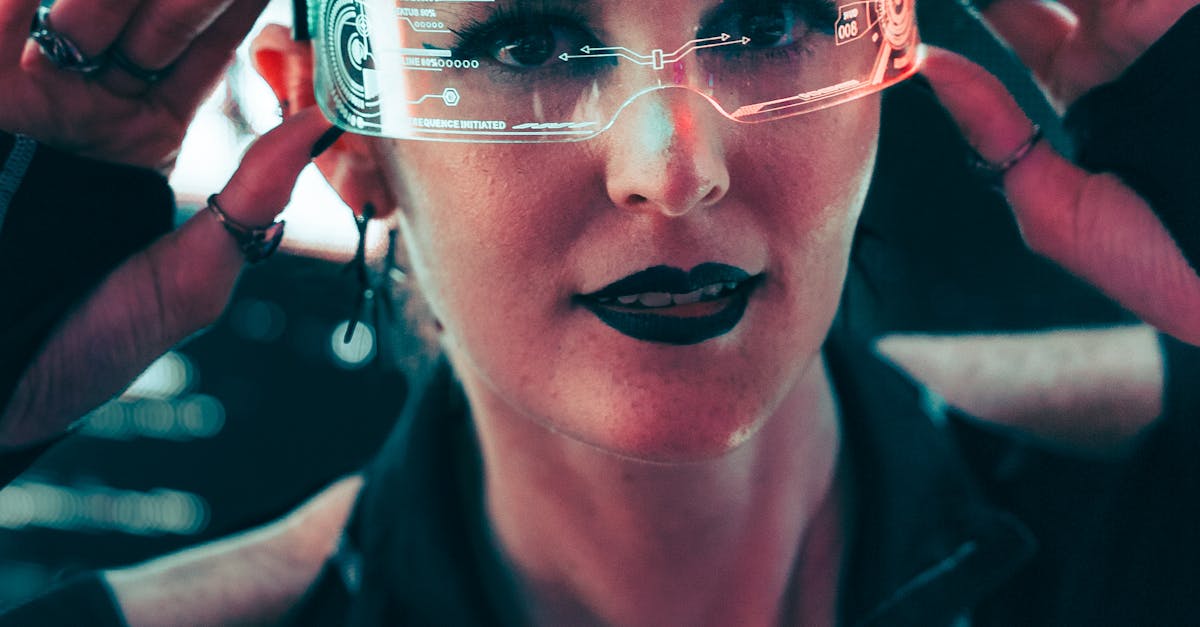
The Display is the third generation of the Ray-Ban Meta line. The original Stories shipped in 2021. Gen 2 arrived in 2024 and is what OPSM and Sunglass Hut Australia sell now. The new bit is the screen. Inside the right lens there is a small full-colour panel, an LCOS chip and a geometric reflective waveguide pushing a 600 by 600 pixel image over a 20 degree diagonal field of view. Peak brightness is 5,000 nits, which sounds insane until you remember it has to fight an Australian summer at midday. Meta says 98 per cent of that brightness stays on the wearer's side of the lens. The person across the table cannot read what you are reading. I have had five colleagues and three baristas in Melbourne squint at me through the glasses, on trams, in cafés, in shops. None of them could see the display when it was on. The privacy claim holds, which matters more than I thought it would.
The other half of the package is the Meta Neural Band, a slim grey wristband that uses surface electromyography (sEMG) to read tiny muscle signals along the underside of your forearm. The band is rated IPX7, which means it survives a Melbourne autumn shower. It weighs about as much as a kid's plastic watch. You pinch your thumb and index finger to select. You pinch thumb and middle finger to go back. To scroll, you slide your thumb along the side of your index finger. The band buzzes once when it registers, which sounds twee but is actually how you trust it. Once you stop hating it, around day three, you do not want to take it off.
The glasses themselves come in two colours, glossy black and a sand colour that looks better than it sounds, in two frame sizes. Total weight is 69 grams, heavier than the 52 gram Gen 2 and noticeably heavier than the 45 gram standard Ray-Ban Wayfarer. You feel that 17 grams. Battery life is rated at 6 hours under mixed use. The included charging case adds four full top-ups, for around 30 hours of total runtime before you need a wall socket.
How much does it cost in Australia?
Officially, nothing, because Meta has not released the Display in Australia. As of May 2026 the only countries with formal launches are the United States, Canada, France, Italy and the United Kingdom. The US RRP is $US799, sold through Best Buy, LensCrafters, Sunglass Hut US, and Meta Lab pop-up stores.
If you want a pair on this side of the Pacific, you have two routes. The first is to fly. I bought mine at the Sunglass Hut on Powell Street in San Francisco in late March, paid $US799 plus 8.625 per cent California sales tax, and walked it through Tullamarine on the way back. The second is to use a forwarding service like Big Apple Buddy, which estimates a landed AU cost of $A1,355 to $A1,410 once you add 10 per cent GST, the import processing charge, express shipping, and the brokerage fee. The Australia US Free Trade Agreement means you do not pay customs duty, which keeps the number from getting silly.
For comparison, the standard Ray-Ban Meta Gen 2 starts at $A449 at JB Hi-Fi, OPSM and Sunglass Hut Australia. The Display is, in real terms, around three times the price of the version you can actually buy here.
What's it like to use day to day?
The first week, I wore them everywhere I would normally wear my regular Wayfarers, except I kept catching myself glancing slightly to the right, looking for something to be there. By week two the glance was gone and the display was a tool I reached for without thinking. By week three I was doing the thing James Pero at Gizmodo described, where the controls feel like "a bit of magic when it works fluidly".
Navigation is the thing that converted me. Walking from Flinders Street Station up Swanston, the next turn arrow sits in the bottom right of my vision, the street name floats above it, and I never look at my phone. The catch, and it is a real one, is that on-glasses navigation only works in 28 supported cities, none of which are in Australia. Outside those cities you tap to confirm the route and the rest is voice prompts and a phone fallback. I tested the official supported set in San Francisco and it was beautiful. In Melbourne I get a static map preview and an arrow when I leave the path, which is still useful but is not the same product.
Live captions are the second thing I keep using. Sitting in a busy café with my friend Eli, who has hearing loss in his left ear, the captions track our conversation in real time across the bottom of the right lens. He asked to borrow the glasses for an hour, came back, and asked me where to buy a pair. Live translation works in 17 languages. I tested it in Cantonese with a friend who runs a bakery in Footscray. It missed slang but caught about 80 per cent of the rest, which is genuinely useful for a tourist.
Other things I tried. WhatsApp message replies dictated by voice, which works once the room is quiet enough. Spotify track changes via Neural Band pinches, which I now do without thinking. Photo framing through a small POV preview window in the lens, which is genuinely useful for shots where pulling out the phone would be intrusive. One video call to my mum, where the postage-stamp display and slightly tinny speakers made the case that this is not a video calling product. The UploadVR reviewer went further, writing "I would never want to watch a video or conduct a video call like this". I agree. The display is for glances, not gazes.
By the end of week one I had stopped saying "Hey Meta" out loud in public. The first time I tried it on a tram three teenagers turned around. I did not realise how much I would mind that. Pinch gestures are quieter and faster, and the Neural Band is the thing that turns the whole package from a demo into a real product.
How does it compare to the Ray-Ban Meta without the display?
The Gen 2, sold here for $A449, has the same camera, the same speakers, the same Meta AI voice assistant and the same 8 hour battery life. What it does not have is a screen. In audio terms the Gen 2 does almost everything the Display does. Voice replies and calls. Music and podcasts. The Meta AI queries. All of it.
So what does $A900 of extra Australian dollars actually buy you? Three things. First, navigation arrows in your peripheral vision, which are excellent in supported cities and degraded but still useful here. Second, live captions and real-time translation that you can actually read instead of having voice prompts rattling around in your head. Third, the small but genuinely useful upgrade of being able to glance at a notification or a message without taking your phone out, which is the original promise of smart glasses and the first time I have felt it actually delivered.
What you give up is comfort and battery. The Display is 17 grams heavier. The frames are obviously larger. The battery is 2 hours shorter. If you only want the audio and camera features, the Gen 2 is the right pair of Ray-Ban Meta for almost everyone. If you want the screen, you accept the trade. There is no version that gives you both.
I have been wearing the Gen 2 for the past 14 months for everyday use. I will keep doing that, and I will reach for the Display when I am travelling, in a city with on-glasses nav support, or going somewhere that live translation matters.
What are the downsides?
The frames look chunky. There is no polite way to say it. Karissa Bell at Engadget called them "extremely chunky and too wide for my face", and that matches my experience. The smaller of the two sizes is fine on my face. It is still visibly thicker than a standard Wayfarer, and the temple arms hide all the electronics in a way you can absolutely see. People notice. Friends asked. Three different baristas asked. Being clocked is part of the deal.
Battery is the second issue. The 6 hour glasses spec is a mixed-use number that includes display-off time, music time and a small amount of HUD use. Once you start using the display heavily, with maps and translation and captions running, you are at 4 hours and change. The case helps, and you should travel with it, but the Neural Band also wants daily charging. That is two more devices on the bedside table.
Third, app support is locked down. The Display talks to a handful of Meta-built integrations, mostly WhatsApp, Messenger, Instagram, Spotify, Meta Maps and the Meta AI assistant. Notifications from anything outside that set, including Gmail, Google Maps, Apple Messages on iOS and most banking apps, do not appear. Bell flagged this as the largest day-to-day limitation in the Engadget review, and I agree.
Fourth, no Australian warranty. If you private-import, you are buying as a consumer importer, and Meta US will not honour repairs in Australia. The Big Apple Buddy guide spells this out plainly. For a $A1,400 product, that is a real number to think about before you click buy.
Should you buy the Meta Ray-Ban Display?
If you are a serious early adopter with $A1,400 to spare, you live in or travel often to a supported nav city, and you genuinely want the HUD experience now rather than 12 months from now, yes. The Display is the best smart glasses I have used. The combination of a clear bright lens display, the Neural Band, and the Ray-Ban industrial design is real, working technology, not a tech-demo. It is the most category-defining wearable since the original Apple Watch. You will actually use it, which is the real test.
For everyone else in Australia, the answer is wait. Wait for the official AU launch, which Meta has not announced but is the obvious next move once the supported nav cities expand. Wait for the second generation of Display, which will almost certainly be lighter, longer-lasting, with broader app support. If you want most of the value now and you are not desperate for a screen, buy the Gen 2 Ray-Ban Meta from JB Hi-Fi for $A449 and put $A900 in an offset account. That is what I would tell my brother to do.
One last thought. Apple Vision Pro shipped, and almost nobody bought one. Apple's promised AI Siri did not ship at all, and Apple just paid a $US250m US class action settlement this week to admit that. After a decade of head-mounted promises, the lesson is that demo videos and products you can wear are different things. Meta has shipped a wearable display that actually works. That is the headline.
Where to buy in Australia
Officially, you cannot. Meta has not launched the Display in Australia as of May 2026, and the AU Meta store currently lists only the standard Ray-Ban Meta range. The realistic options are three. You wait for the AU launch, which Meta has not dated. You buy on a US trip from Best Buy, LensCrafters, Sunglass Hut US or one of the Meta Lab pop-ups. Or you use a forwarding service like Big Apple Buddy at a landed cost of around $A1,400. If you want the Ray-Ban Meta Gen 2 without the screen, JB Hi-Fi, OPSM and Sunglass Hut Australia stock it from $A449. Ray-Ban Australia carries the Gen 1 from $A337.
Pip Sanderson
Reviews editor on phones, wearables, and the gear that lands in Australian shops. Reports from Melbourne.